
Boating Instruction in Sag Harbor
A man bought a 32-foot boat last spring and kept it at our marina. He had his state certificate. He had read the manuals twice. On his third weekend he sat in the fairway for eleven minutes with his family aboard, unable to make himself commit to the slip. He finally waved down a dock hand and asked him to bring it in.
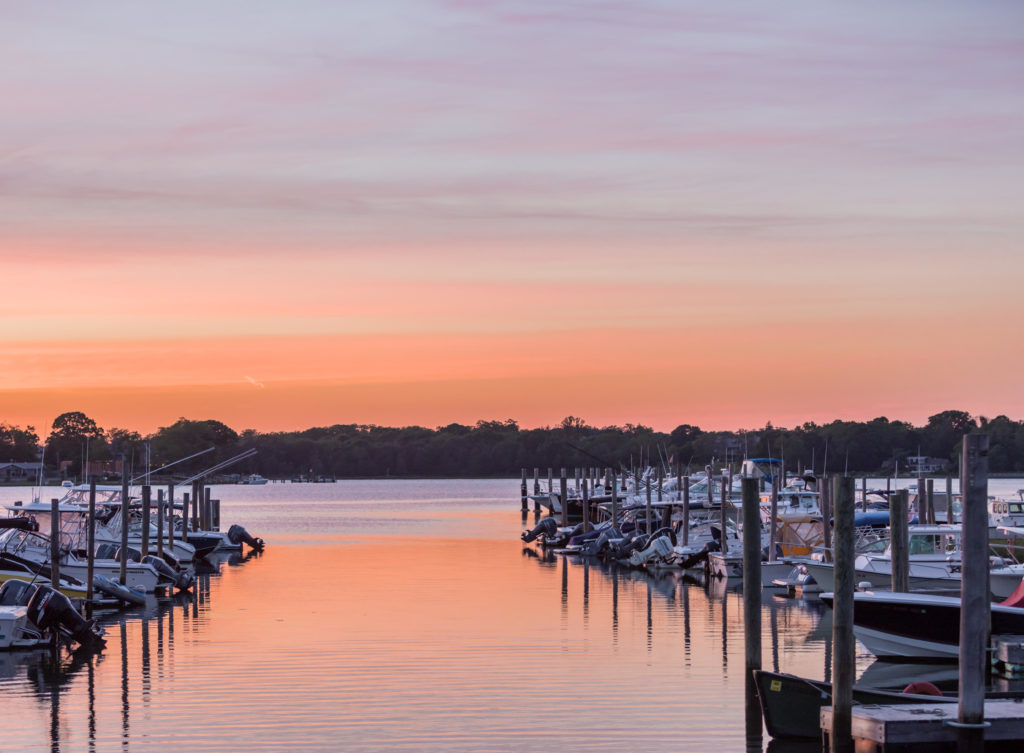
That is not a rare story. It is the most common one we hear. Boating instruction in Sag Harbor exists to close the gap between holding a certificate and actually being able to run your boat. We teach from our marina at 51 Pine Neck Ave, on Mill Creek in Noyac, using the protected bays of the East End as a classroom.
What New York Law Actually Requires
Most people arrive with the rules half right. Here is the current picture.
Every Motorized Operator Now Needs a Certificate
Brianna's Law finished its phase-in on January 1, 2025. Before that date the requirement rolled out by birth year, which is why so many boaters still think it does not apply to them. It now covers everyone.
If you operate a motorized vessel on New York waters, you need a New York State Boating Safety Certificate. Your age and your years of experience do not change that. The certificate comes from the New York State Office of Parks, Recreation and Historic Preservation, does not expire, and never needs renewal. Operating without one carries a fine of $100 to $250.
Sailboats and Paddle Craft Are Treated Differently
The law applies to motorized vessels. Sailboats under sail, kayaks, canoes, and paddleboards fall outside it. A sailboat with an auxiliary motor counts as motorized when that motor is running.
This trips up people who own both. The rule follows the propulsion, not the hull.
The Rule Reaches Renters and Club Members
A common assumption is that the certificate only applies to owners. It does not. If you are the person at the helm of a rented or shared motorized boat, the requirement is yours.
Anyone planning to operate a boat through a boat club membership or rental arrangement should sort this out before the season starts rather than on the dock in July.
What the Certificate Does Not Do
Here is the part nobody says out loud. The state course can be completed online in a few hours. It teaches rules of the road, required equipment, and safety procedure, and it is genuinely useful.
It does not put you at a helm. It does not teach you what your particular boat does when a crosswind catches the bow at low speed. It cannot show you how a three-foot tide change alters an approach you handled easily six hours earlier. That is learned on the water, with someone standing next to you.
Two Ways to Learn With Us
We split instruction into two tracks. Most people start with one and add the other later.
Captain Lessons
The broad track, built for owners and future owners. It covers trip planning, reading weather and tide before you leave, chart work on the East End bays, rules of the road, anchoring, passenger safety, and what to do when something fails.
The goal is that you can plan and execute a full day on the water without anyone aboard who knows more than you do.
Boat Handling Instruction
Narrow and physical. Docking, backing, pivoting in tight water, holding position, coming alongside, and using spring lines. It is repetition at close quarters until your hands stop asking your brain for permission.
This is the track people book when they already cruise comfortably but dread the last hundred feet.
Which One Should You Start With
If you have never operated a boat, start with captain lessons. If you have boated for years and the docking is the problem, go straight to boat handling. If you do not own a boat yet, our boat rentals are a reasonable place to begin.
If you just took delivery of a boat noticeably larger than your last one, you probably want both. The handling changes more than owners expect.
Boating Instruction on East End Water
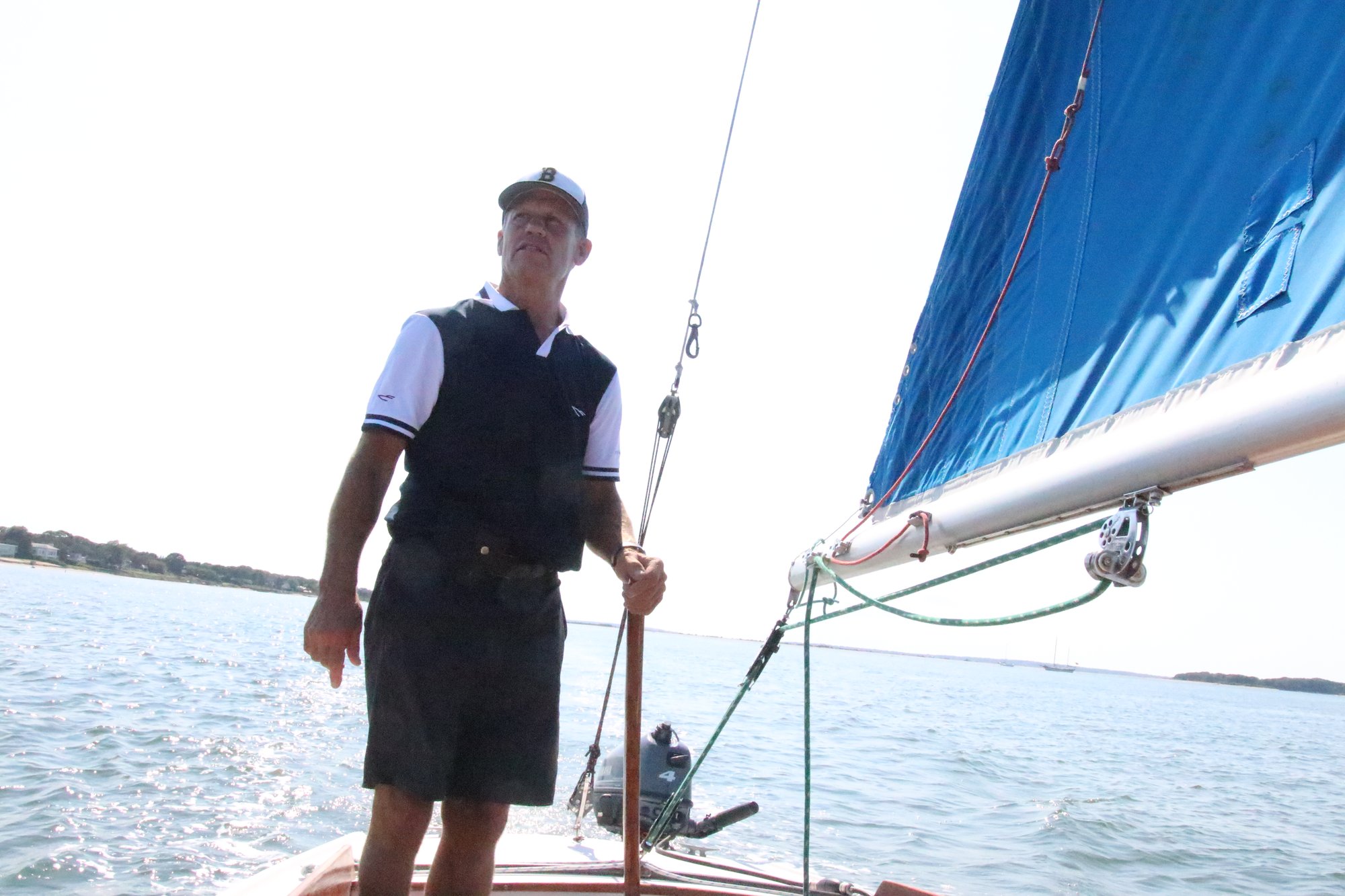
Where you learn shapes how quickly you learn. This is the part of our boating instruction that operators elsewhere in the region cannot copy.
Protected Bays Instead of Open Water
Our home water is Mill Creek, then out through Noyac Bay to Peconic Bay and Shelter Island Sound. These are back bays. The fetch is short and the chop stays small.
Learning in open water means a windy day becomes an endurance exercise instead of a lesson. Here, a breezy afternoon is still a usable teaching day. You spend the session building skill rather than hanging on.
The Mill Creek Approach
Mill Creek is reached through a privately dredged channel. It is marked with private seasonal buoys, not federal aids. Boaters new to the area look for standard channel markers and do not find them.
Our maximum draft is five feet, and the approach is shallow enough that arrival timing matters, particularly on a falling tide. We run this approach with you until it becomes routine rather than a source of low-grade dread every time you come home.
Reading a Three-Foot Tide
Tides here move roughly three feet. That is enough to change everything about a docking approach between morning and afternoon.
Current sets differently through the creek depending on the stage of tide. A slip that felt forgiving at slack water behaves differently two hours later. We schedule sessions across different tide stages on purpose, so you see your boat behave more than one way.
Knowing Your Range
Part of instruction is learning what is actually within reach. From the creek you can be in Noyac Bay within minutes. Shelter Island Sound, North Haven, and the wider Peconic Bay open up from there.
Understanding your realistic range for a half day versus a full day is a planning skill. Most new owners do not have it. We build it.
Who We Teach
New and First-Time Owners
People who just took delivery and want to be competent before the first family weekend. This is our largest group by a wide margin.
Boaters Returning After Time Away
Skills fade. Someone who ran boats confidently fifteen years ago often finds modern electronics and a larger hull humbling. A few sessions usually restores it faster than they expect.
Second Operators in the Family
Spouses, partners, and adult children who have always been passengers. Having a second person aboard who can bring the boat home is a safety issue, not a convenience.
Owners Who Keep a Boat Here
If you hold a seasonal slip rental with us, your instruction happens on your home water, off your own dock, in the fairway you use every weekend. That is the most directly useful version of this training.
Booking and Practical Details
Our instruction season runs May 1 through October 31. The marina is open 24 hours and our team is on site year round.
Appointments are recommended. Weekend dates in July and August fill first, so book early if your schedule is inflexible. Weekday sessions are easier to get and usually calmer on the water.
We accept cash, credit cards, debit cards, and mobile payments including Apple Pay and Google Pay.
What a First Session Looks Like
People are often nervous about the first one, usually because they expect to be judged. That is not how this works.
We Start at the Dock
The first twenty minutes happen tied up. We walk the boat with you, find the safety equipment, check what is aboard against what should be, and talk about what you already know.
This is also where we find out what you are actually worried about. Most people arrive saying they want to improve generally, and within ten minutes it turns out there is one specific situation that frightens them. That becomes the session.
You Drive
You are at the helm from the moment the lines come off. We do not demonstrate for an hour while you watch.
Watching someone else dock a boat teaches you almost nothing. Your hands need the repetitions, not your eyes.
We Work Where You Are Weakest
Some people need an hour on approaches. Others are fine at the dock and fall apart in traffic. We do not run a fixed curriculum in a fixed order, because the useful session is the one that goes after the actual gap.
What to Bring
Soft-soled shoes, sunglasses, and layers. A hat that stays on. If you have your own boat, bring its manual and any paperwork you have never read.
If you have a specific trip in mind for later in the season, tell us about it. Planning a real trip is a better lesson than planning a hypothetical one.
Start Where the Certificate Stops
The state course makes you legal. Instruction makes you capable. Those are different things, and the distance between them is measured in confidence at the dock with people watching.
We teach on protected East End water, from a marina that has been working since 1953. Whether you need the full picture or just want to stop dreading the slip, we will meet you where your skills actually are.
Call 631-500-7777 to book boating instruction at our Sag Harbor marina.